The most consequential arena in American politics may no longer be Congress, the campaign trail, or the voting booth. It is the phone in nearly every citizen’s hand.
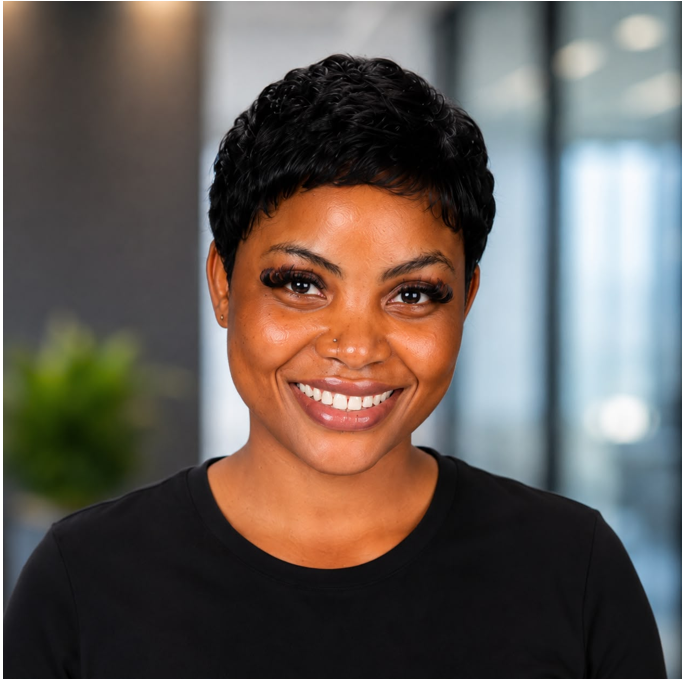
That is the argument advanced by political researcher Kafayat Ololade Liadi, whose new study contends that social media has quietly become one of the most powerful forces shaping public opinion in the United States and that the health of American democracy now depends on how clearly societies understand it.
“Political power used to flow from the top down — from networks, newspapers, and party headquarters out to the public,” Liadi said. “That hierarchy is gone. On these platforms, a first-time voter and a sitting senator are competing for attention in the same feed at the same moment.”
Drawing on a systematic review of scholarly research published between 2013 and 2024, Liadi traces how platforms such as Twitter and Facebook have turned political participation into something more interactive, more immediate, and far less centralized than the broadcast era that preceded it. Millions of Americans now consume political news, argue over policy, organize movements, and speak directly to elected officials with no intermediary in between.
“This is the widest expansion of access to political conversation in modern history,” she said. “The barriers that once kept ordinary people out of the debate — money, media gatekeepers, geography — have fallen away almost overnight.”
But Liadi is careful not to mistake that reach for progress. The same review that documents a more open public square, she notes, also documents its costs. The technologies that draw citizens into political life can just as readily accelerate misinformation, harden partisan divides, and push emotionally charged content to the top of the feed.
“The same design that invites people in can just as easily pull them apart,” Liadi said. “Algorithms don’t reward accuracy or nuance. They reward whatever keeps you scrolling—and outrage keeps you scrolling.”
Rather than simply mirroring public opinion, she argues, these recommendation systems increasingly shape it, steering what citizens see, discuss, and ultimately believe. Over time, online political life fractures into isolated communities that reinforce existing views and rarely admit competing ones.
“An echo chamber isn’t only a place where everyone agrees with you,” she said. “It’s a place where you slowly stop encountering the people who don’t.”
Much of the study’s force lies in where it assigns responsibility. Liadi presses the case that technology companies can no longer treat the civic consequences of their products as someone else’s problem. She calls for greater transparency in how algorithms are designed, stronger fact-checking systems, and clearer accountability for the political information that platforms circulate.
“Transparency cannot be optional,” Liadi said. “If an algorithm is shaping what millions of voters believe, the public has a right to understand how it works, and the companies have a duty to answer for it.”
She pairs that demand with a call for media literacy as a public priority, arguing that citizens must be equipped to evaluate what they encounter online rather than absorbing algorithmically curated content without question. Protecting democratic discourse, in her account, is not the work of any single sector: regulators, platforms, independent journalists, educators, and informed citizens each carry part of the load, and the safeguards fail when any one of them opts out.
Liadi’s work is also pointed toward what comes next. Advances in artificial intelligence and ever more sophisticated content-recommendation systems, she warns, will keep reshaping political communication—widening its reach while sharpening its risks around misinformation, privacy, manipulation, and the concentration of informational power in a handful of firms.
“Artificial intelligence is about to make all of this faster, cheaper, and harder to detect,” she said. “If we wait until the damage is done to start paying attention, we will already be too late.”
At a moment when elections, public trust, and everyday civic participation are increasingly mediated by digital platforms, Liadi’s research reads less as a warning than as a roadmap — one for policymakers and technology leaders trying to reconcile innovation with democratic accountability. Rather than treating social media as a neutral communication tool, she positions it as one of the defining political institutions of the twenty-first century, whose design and governance will help decide the future of democratic societies.
As disputes over online misinformation, artificial intelligence, election integrity, and digital regulation intensify around the world, her scholarship arrives as a timely and forward-looking contribution. Technology has transformed how democracies communicate, Liadi argues; the responsibility for protecting democratic values still belongs to governments, technology companies, researchers, and citizens alike.