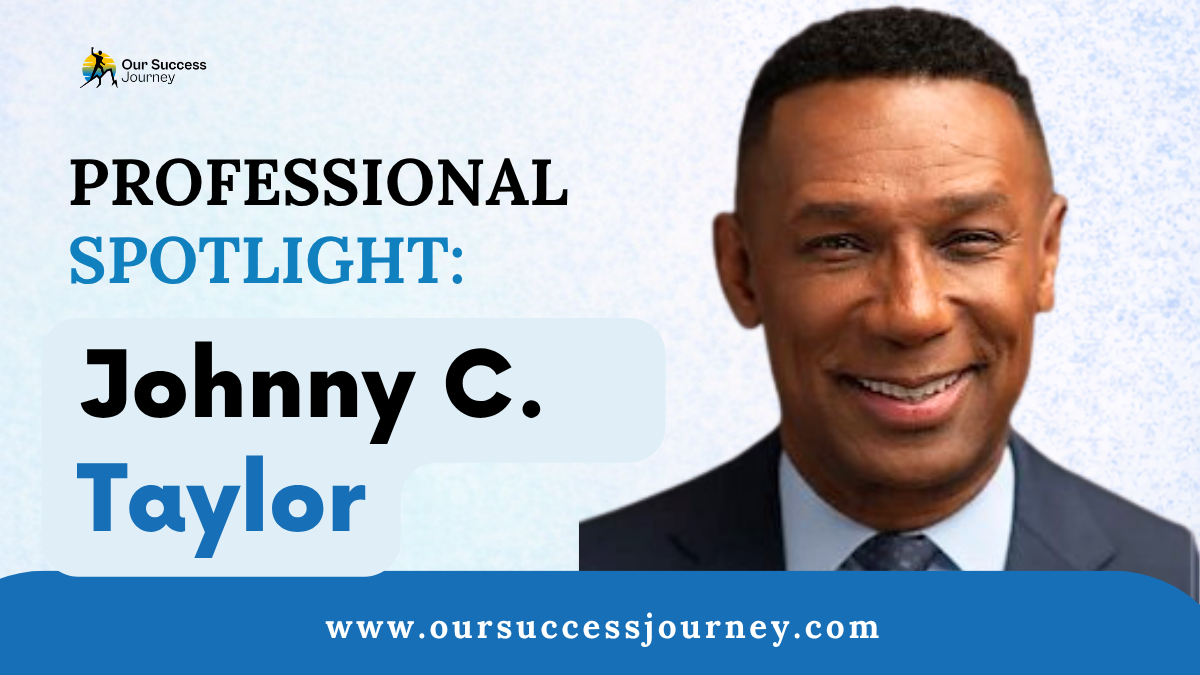
When conversations about the future of work, leadership, talent, and workplace culture reach the highest levels, few names carry the weight of Johnny C. Taylor Jr., SHRM-SCP.
As President and CEO of the Society for Human Resource Management (SHRM), Taylor leads one of the world’s most influential organizations dedicated to the human resources profession. SHRM represents nearly 340,000 members across 180 countries and reaches more than 362 million workers and their families globally. That alone would make his career remarkable. But Taylor’s influence extends far beyond the title of President and CEO.
Over the course of his career, he has moved across law, human resources, corporate leadership, education, nonprofit management, public policy, advocacy, and executive leadership. At every stage, he has taken on increasingly complex challenges, eventually becoming one of the most prominent voices shaping conversations about the modern workplace.
His journey is not simply about climbing the corporate ladder. It is about continually positioning himself where people, organizations, leadership, and opportunity intersect. And that journey began with an education that was already broader than the career he would eventually build.
Taylor earned a Bachelor of Science in Broadcast Journalism from the University of Miami before earning a Juris Doctor from Drake University Law School and a Master of Arts in Mass Communication and Media Studies, also from Drake. That combination of communication, media, and law would become an unexpected foundation for a career that would eventually require him to communicate complex issues, understand institutions, advise organizations, lead people, and influence public conversations.
He began his professional career in law, working as an associate at Squire Patton Boggs (formerly Steel Hector & Davis), where he practiced complex commercial litigation. But Taylor’s career was never going to remain confined to the courtroom, and his transition into human resources became one of the defining moments of his professional journey.
At Blockbuster, he served as Associate General Counsel before becoming Vice President of Human Resources for North America, overseeing HR for major parts of the company’s operations, including Blockbuster Stores, Discovery Zone, Paramount Parks, and Blockbuster Park. It was more than a career change, it was the beginning of a professional identity that combined legal expertise with an understanding of people, organizational culture, leadership, and business.
Taylor continued to take on increasingly senior responsibilities. At Alamo Rent A Car, he served as Vice President of Legal Affairs and helped bring the company’s legal work in-house by building a full-service internal legal department. At Paramount Pictures, he became General Counsel and Senior Vice President of Human Resources for the Paramount Live Entertainment Group, overseeing legal, risk management, and HR for the theme park and live entertainment division. Then came Compass Group North America, where he served as Executive Vice President and General Counsel, overseeing substantial legal and risk management functions. With every move, the scope of his leadership expanded.
In 2004, Taylor became a partner and President of the HR Consulting Group at McGuireWoods LLP, where he founded the firm’s Human Resources and HR consulting practice. This was a significant milestone: it positioned him not merely as someone working within organizations, but as someone helping organizations solve complex people and workplace challenges.
His next chapter took him into corporate executive leadership. At IAC, Taylor served as Senior Vice President of Human Resources before becoming Group Chief Executive Officer, with HR responsibilities extending across a portfolio that included Ticketmaster, Home Shopping Network, Match.com, LendingTree.com, Ask.com, Citysearch.com, and Shoebuy.com. As Group CEO, he was also responsible for creating, building, and launching Rushmore Drive, described in his profile as the first-ever “Identity Search” engine. This chapter demonstrated something important about Taylor’s trajectory: he was no longer simply an expert in one function. He had become an executive capable of moving between strategy, people, operations, innovation, and organizational leadership.
In 2010, Taylor took on another defining assignment, becoming President and CEO of the Thurgood Marshall College Fund, where he led the national organization representing and advocating for the country’s 47 public Historically Black Colleges and Universities. He remained in that role until 2017.
The move was significant because it placed Taylor at the intersection of leadership, education, opportunity, advocacy, and institutional development, expanding his influence beyond corporate America. By this point, his career had become a powerful combination of business leadership and public impact.
In 2017, Taylor became President and CEO of SHRM. Today, he leads an organization with a global membership of nearly 340,000 professionals across 180 countries, putting him at the center of some of the most important conversations facing employers and workers: leadership, workforce development, workplace culture, skills, employment policy, and the future of work. SHRM describes Taylor as a dynamic leader whose thought leadership is shaping current and future generations of the global workforce.
His influence has also extended into public policy. Taylor has testified before Congress on workforce issues and previously served on the White House American Workforce Policy Advisory Board. He also served as chairman of the President’s Advisory Board on Historically Black Colleges and Universities. Taylor is not simply participating in conversations about the future of work,he has been invited into rooms where those conversations shape policy and institutions.
Taylor’s influence also extends into corporate governance. He serves as Lead Independent Director of XPO Logistics and sits on the boards of Guild Education and AACSB. He also serves as Human Capital Expert in Residence at High Point University, where he mentors students and shares his expertise.
He is also an author and public intellectual. His book, RESET: A Leader’s Guide to Work in an Age of Upheaval, became a national bestseller and reached the top three of The Wall Street Journal‘s hardcover business book bestseller list following its release in September 2021. Through his “Ask Johnny” column for USA Today, he has continued to make workplace leadership and employment issues accessible to a wider audience,moving fluidly between executive leadership and public communication.
Recognition has followed. Taylor has been named among Washingtonian magazine’s most influential people shaping public policy in Washington, D.C., recognized by Savoy magazine among its 300 Most Influential Executives in Corporate America, and included on the Virginia 500 Power List. He has received the Academy of Management’s 2020 Distinguished Executive of the Year Award and was named Professional Society CEO of the Year by CEO Update in 2021. Earlier in his career, he was named Alumni of the Year by Drake University and received LinkedIn’s Best in Class recognition for Government, Advocacy, and Nonprofit.
Taylor has worked as a lawyer, led human resources functions, served as a corporate executive, led a major national nonprofit, advised on public policy, served on corporate and academic boards, written a bestselling book, and now leads one of the world’s most influential professional associations for HR.
These are not disconnected achievements, they tell the story of a professional who consistently expanded his capacity to lead. His legal background gave him one perspective; his human resources experience gave him another. Corporate leadership expanded his understanding of organizations. Nonprofit leadership strengthened his experience in advocacy and institutional impact. Public policy placed his expertise in a broader national conversation. And SHRM brought those experiences together on a global platform.
At the heart of his work is the belief that work begins and ends with people, and that better workplaces build a better world, a philosophy reflected in the conversations he continues to lead around workplace culture, leadership, skills-based hiring, workforce development, and the future of work.
For professionals watching his journey, there is a lesson beyond the impressive titles: Taylor’s career shows the power of reinvention without losing direction. He did not remain in one professional lane, he allowed every stage of his career to add something new to the next. Law gave him a foundation. Human resources gave him a deeper understanding of people and organizations. Corporate leadership expanded his strategic perspective. Nonprofit leadership broadened his influence. Public policy amplified his voice. And global executive leadership gave him the platform to bring all of those experiences together.
That is why Johnny C. Taylor Jr.’s story deserves to be viewed as more than another executive biography. It is the story of a leader who has built influence across business, human resources, education, public policy, and the future of work.
From the courtroom to corporate leadership, from leading the Thurgood Marshall College Fund to becoming President and CEO of SHRM, Taylor has continually stepped into positions where his decisions, ideas, and leadership can influence organizations and the people within them.
His journey is a powerful reminder that extraordinary careers are not built by titles alone, they are built through expertise, the courage to evolve, the ability to lead through change, and the willingness to use every new platform to create greater impact.
Johnny C. Taylor Jr. has done exactly that. And today, as the world of work continues to change at an unprecedented pace, he is not simply watching that future unfold, he is one of the leaders helping to shape it.
This article is for educational and informational purposes only.All third-party sources are credited and used in line with fair use.