Technology becomes truly transformative when it moves beyond what is possible today and begins solving problems in ways that change how people interact with the world.
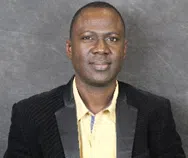
For Daniel Ajiga, that transformation has been shaped by a career built around curiosity, technical excellence, and a determination to make complex systems more efficient, intelligent, and useful. His journey has taken him from software development and technology infrastructure into artificial intelligence and machine learning, where his work now contributes to systems behind products and experiences used by people around the world.
At Apple, Ajiga works as an AI/ML Software Engineer, contributing to areas involving Apple TV, Siri, Knowledge Graph infrastructure, search, entity linking, content freshness, and machine learning systems. His work sits at the intersection of software engineering and artificial intelligence, where even seemingly small improvements can influence how information is processed, understood, and delivered.
What makes his journey particularly compelling, however, is not simply the companies he has worked for. It is the pattern behind his career: identifying difficult technical problems and building solutions that make systems work better.
Ajiga’s foundation in technology was built at Alcorn State University, where he studied Computer Science. From the beginning, his academic journey reflected a strong commitment to excellence.
He consistently distinguished himself academically, earning recognition through the university’s President’s List and receiving significant scholarship support. His academic achievements were also recognised beyond the university, including through the Waymon Webster Scholarship from Travis Scott’s Cactus Jack Foundation, which recognised his academic excellence and resilience in overcoming financial hardship.
His development as a technologist was equally notable. While still building his academic foundation, Ajiga received the Emerging Software Developer of the Year Award at the Nigeria Technology Awards.
These accomplishments provide important context for the career that followed. His success in technology did not emerge suddenly. It was built through discipline, learning, problem solving, and a willingness to continually develop his technical abilities.
Before joining Apple, Ajiga had already begun developing a reputation for approaching technology through the lens of practical problem solving.
During his time with Fidelity Investments, he worked on personal investing applications, developed data analysis algorithms, and contributed to user experience improvements. His work also supported greater productivity within the team. His experience at Microsoft brought another opportunity to tackle an efficiency challenge.
He later joined NBCUniversal as a Media Technology Infrastructure Engineer, where he developed an automated system for organising work-related files received from internal and external media partners. The solution reduced manual effort and created a more streamlined workflow for engineers.
Across these experiences, a clear pattern began to emerge. Ajiga was not simply interested in writing software. He was interested in understanding where systems struggled and creating better ways for them to operate. Joining Apple marked a significant progression in Ajiga’s professional journey.
As an AI/ML Software Engineer, he has contributed to technology involving some of Apple’s most recognisable products and information systems. His work has included developing features for Apple TV, integrating Apple’s Knowledge Graph into an on-device knowledge base, and implementing logic and machine learning systems designed to improve Siri’s ability to distinguish genuine requests from false triggers.
His work has also extended into information discovery. Ajiga spearheaded the implementation of Place of Interest within Apple’s Highlights experience, helping make business information more accessible to users.
Behind these experiences are complex systems responsible for collecting, processing, organising, and delivering information. Ajiga’s role places him directly within this technical infrastructure.
One notable example is his work on Apple’s Wikipedia ingestion pipeline. He led its migration to Wikimedia Enterprise, transforming an older processing structure into a streaming system built with Kafka. The new architecture was designed to improve the way information moved through the system while maintaining accuracy and reliability.
This type of engineering is rarely visible to the average user. Yet it is essential to the digital experiences people depend on.
Efficiency has remained one of the strongest themes throughout Ajiga’s career. At Apple, he designed and deployed KG Direct Answer, a search and ranking pathway capable of returning direct Knowledge Graph answers for confident factual queries without sending every request through a large language model summariser. The approach improved serving speed while maintaining answer quality.
He also worked on the Knowledge-to-Text pipeline, which converts Knowledge Graph information into natural language for downstream generation. Through workflow automation, validation, and failure reporting, he significantly improved the efficiency of the pipeline.
Another important part of his work involves content integrity.
Ajiga designed a machine-learning model for routing Wikipedia edits based on the likelihood that an edit could later be reverted. The goal was to allow trustworthy content to move through the system more efficiently while maintaining protection against vandalism.
He has also worked on Offline Entity Annotations, a large-scale entity-linking system responsible for connecting information across extensive collections of documents and mentions. His responsibilities have included workflow automation, orchestration, GPU model-serving readiness, and validation controls.
Together, these projects demonstrate an engineer focused not only on building intelligent systems, but on making those systems dependable, scalable, and efficient.
Ajiga’s contribution to technology extends beyond his professional responsibilities.
His research interests cover artificial intelligence, cybersecurity, software engineering, data analytics, machine learning, business intelligence, blockchain, automation, and digital systems. His published work explores subjects including AI-powered cyber hygiene, blockchain applications, zero trust architecture, AI in software development, cybersecurity, behavioural biometrics, artificial intelligence in human resources, predictive analytics, and business intelligence.
His research also considers the relationship between technology and wider organisational challenges, including sustainability, risk management, industrial operations, strategic decision-making, and scalable software systems.
This research activity adds another dimension to his professional profile. Ajiga is not simply applying existing technologies. He is also participating in conversations about how emerging technologies can be developed and applied to solve new problems.
His involvement in academic publishing further demonstrates that commitment. He has served as a Section Editor for research journals, contributing to calls for papers, peer-review processes, and publication activities across areas related to artificial intelligence, software engineering, data analytics, and machine learning.
For Ajiga, professional development has never been limited to formal education or employment. He has also participated in major technology conferences, including AfroTech. His participation has given him opportunities to engage with industry discussions around innovation, technology, leadership, inclusion, and the future of the technology sector.
His professional affiliations include the Association for Computing Machinery, the Institute of Electrical and Electronics Engineers, and the International Association for Artificial Intelligence. He is also associated with professional organisations in management consulting, engineering, information, strategy, leadership, and research.
These activities reflect an approach to career development that goes beyond acquiring technical skills. They show an interest in understanding technology from multiple perspectives and remaining connected to the research, professional, and intellectual communities shaping its future.
Daniel Ajiga’s journey is ultimately a story about what can happen when technical knowledge is paired with curiosity, persistence, and a genuine interest in solving difficult problems.
From developing software solutions before entering the world of large-scale technology to contributing to artificial intelligence systems at Apple, his career has consistently moved toward increasingly complex challenges.
His work demonstrates an ability to look beyond the immediate problem and consider how a system can become faster, smarter, more reliable, and more useful. Whether working on software efficiency, information infrastructure, machine learning, automation, search, or knowledge systems, the underlying goal remains consistent: building technology that performs better and solves real problems.
His research contributions reveal another side of that journey. They show a professional who is not content to participate only in the technology being built today, but is also interested in contributing to the ideas and research that will influence what comes next.
That combination of engineering, artificial intelligence, research, and continuous learning has shaped Ajiga’s professional path and positioned him within a rapidly evolving technology landscape.
His journey is a powerful testament to what technical excellence, persistence, innovation, and a commitment to solving real problems can accomplish when applied consistently.